
Clean Water Boreholes (Uganda)
Permanent, pathogen- and heavy-metal-free drinking water for rural villages of 500–1,000+ people — about $100 NZD provides clean water for 5 people.
Fund our First Borehole
Help us reach $10,000.00 NZD to drill our first deep-water community borehole in Western Uganda. Each borehole serves 500–1,000+ people (100+ families) for generations — meaning about $100 NZD provides clean water for 5 people.
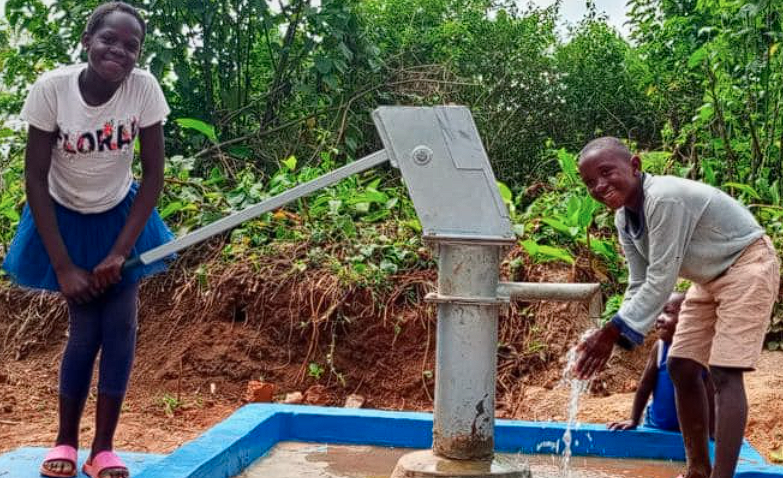
Why Deep Boreholes Are Essential Near Kasese's Copper Mines
In parts of Kasese District — particularly along the Nyamwamba Basin and Kilembe copper runoff corridor — surface rivers, shallow springs, and open wells are contaminated not only by bacteria, but by dissolved heavy metals including copper, cobalt, zinc, and iron.
While our $20 household water filters brilliantly remove bacteria and parasites in clean-mineral villages, membrane water filters cannot filter out dissolved copper or heavy metals. For communities near the copper mines, drilling a deep, cased borehole into protected underground aquifers is the only safe, permanent drinking water solution.
On-the-Ground Water Testing in Kasese
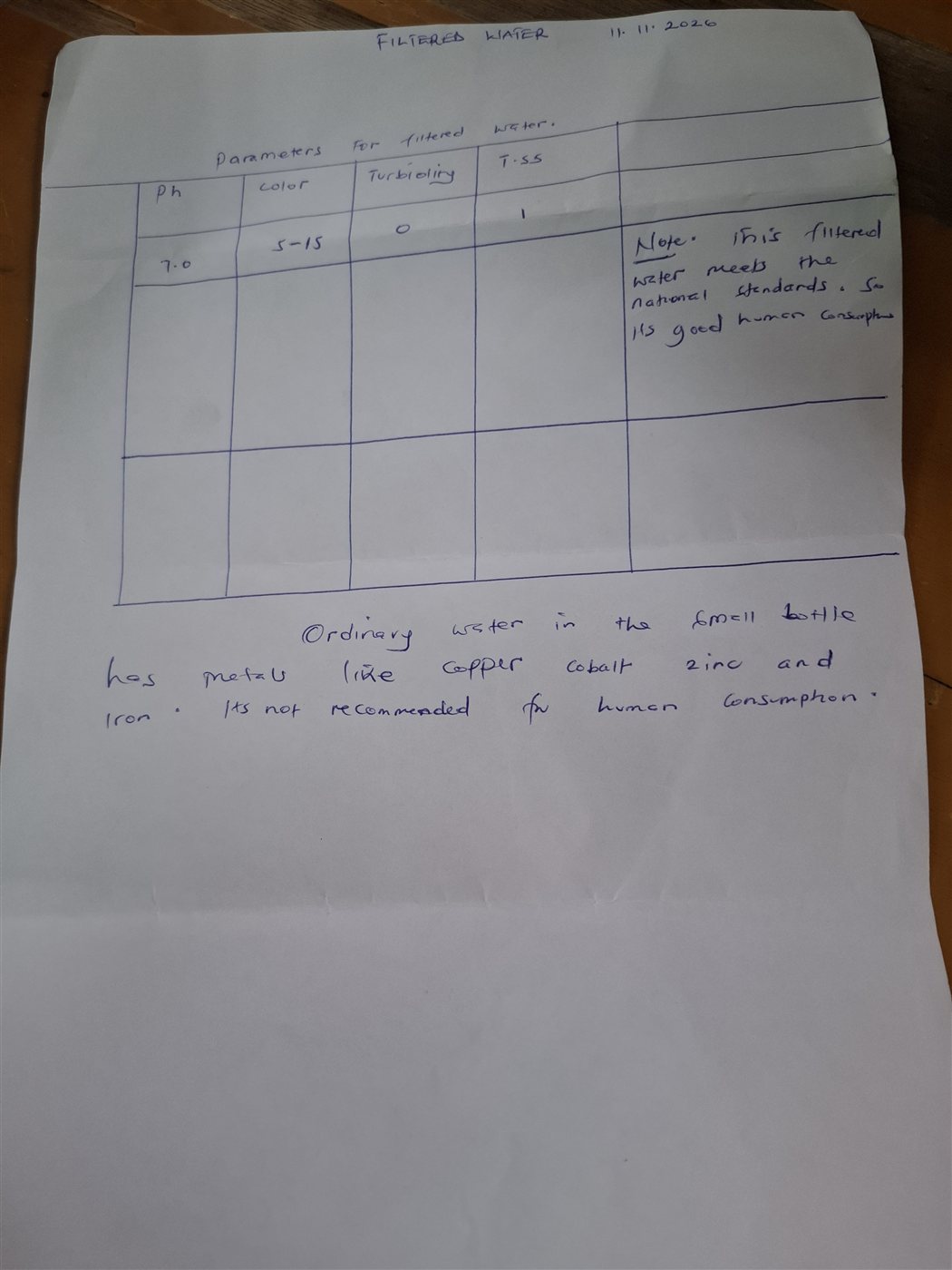
During David Allis's November 2026 visit, local water quality testing confirmed both sides of our strategy: 0.1-micron filtered spring water met national drinking standards (pH 7.0, turbidity 0, TSS 1), whereas raw water in copper-runoff zones showed elevated copper, cobalt, zinc, and iron — unsafe for human consumption without deep borehole access.
Two Proven Borehole Engineering Tiers
Deep Hand-Pump Borehole (India Mark II / III)
Drilled 45–60m+ into protected bedrock aquifers by MWE-licensed contractors with sanitary annular grouting in the top 10–15m, raised concrete apron, drainage soakaway, and 24-hour pump & lab quality testing. Requires zero fuel or electricity and is maintained by a local Village Water Committee.
Solar-Powered Submersible Water Kiosk
Where water tables sit deeper (>65–70m) or larger communities gather, solar submersible pumps feed an elevated storage tank and multi-tap kiosk. An elected Village Water Committee manages transparent pay-per-jerrycan fees (~100 UGX per 20L can) into a ring-fenced maintenance and future water expansion fund.
100% Community-Owned Maintenance
Community Transformation Trust liaises directly with village leaders on the ground alongside partners MUWOFA, KIYOSIMA, and Act for the Poor Association (APA). Before drilling begins, every community elects a Village Water Committee with trained female and male leaders, transparent repair accounts, and local pump mechanics so clean water keeps flowing for decades.